A Multimodal Conditional Mixture Model with Distribution-Level Physics Priors
This page was written by Jinkyo Han with the help of AI (Claude by Anthropic).
Overview
Many physical systems have more than one admissible outcome for the same input, because of bifurcations, regime switching or non-unique mechanisms. Predicting the full conditional distribution of such outcomes is needed, but modern generative models are data-hungry, hard to constrain with physics, and often difficult to interpret.
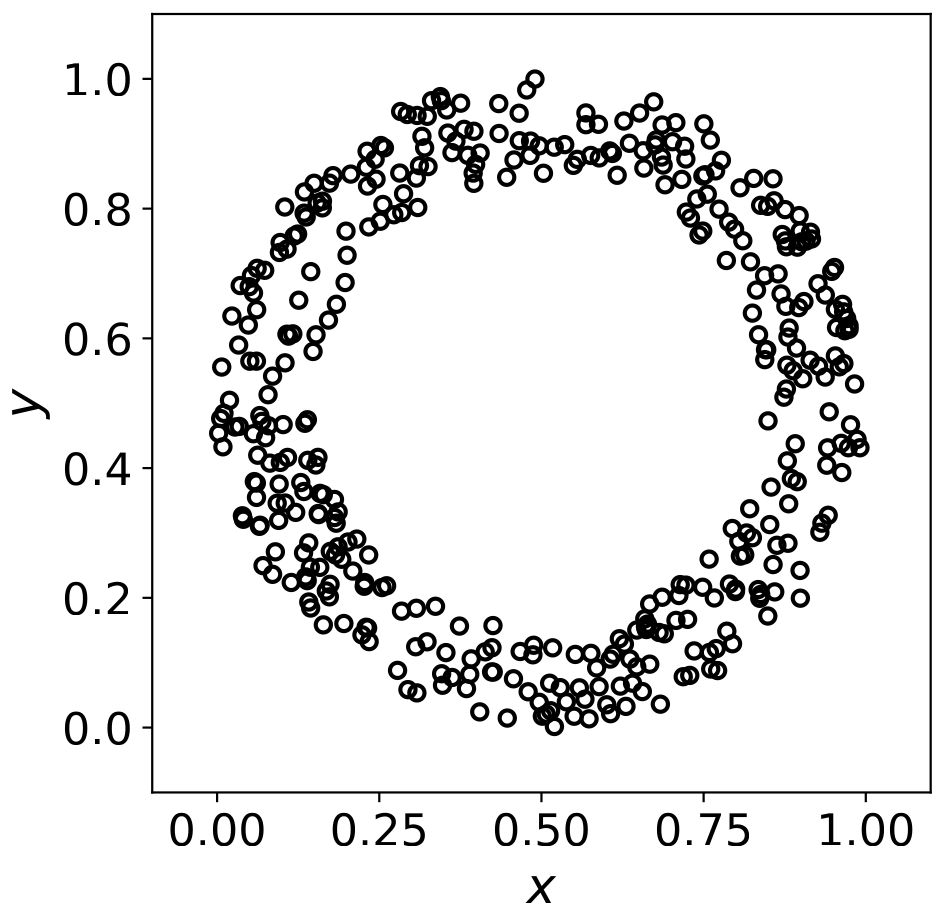
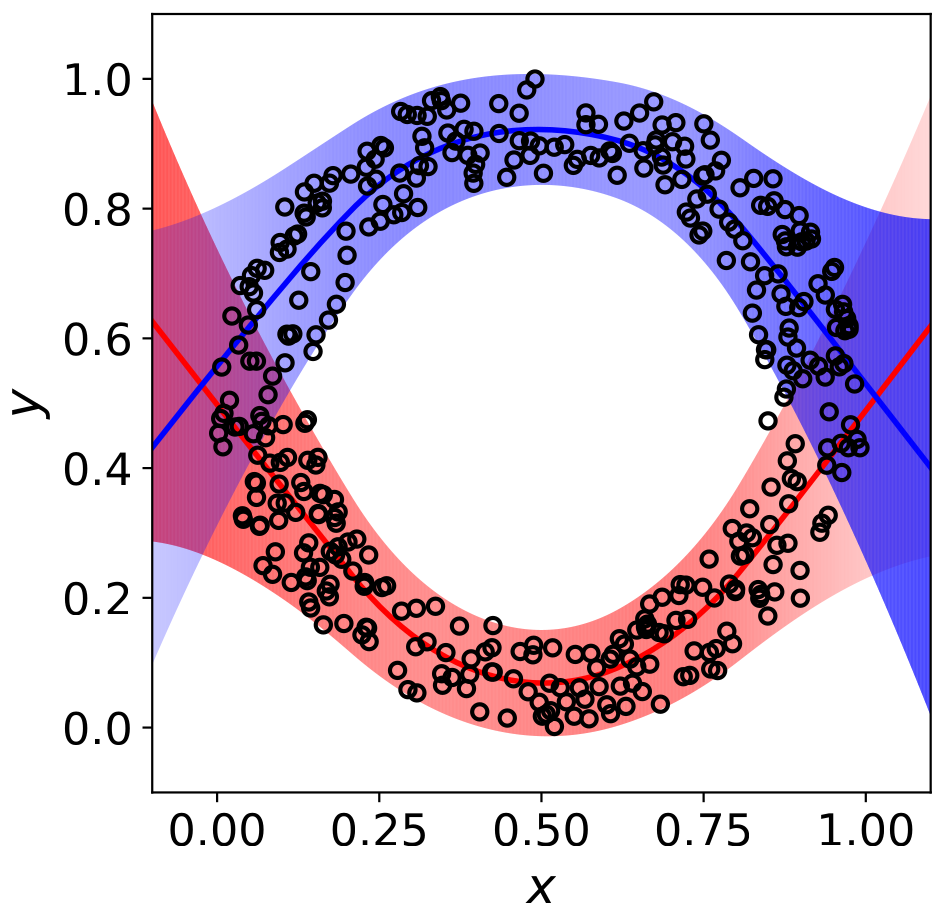
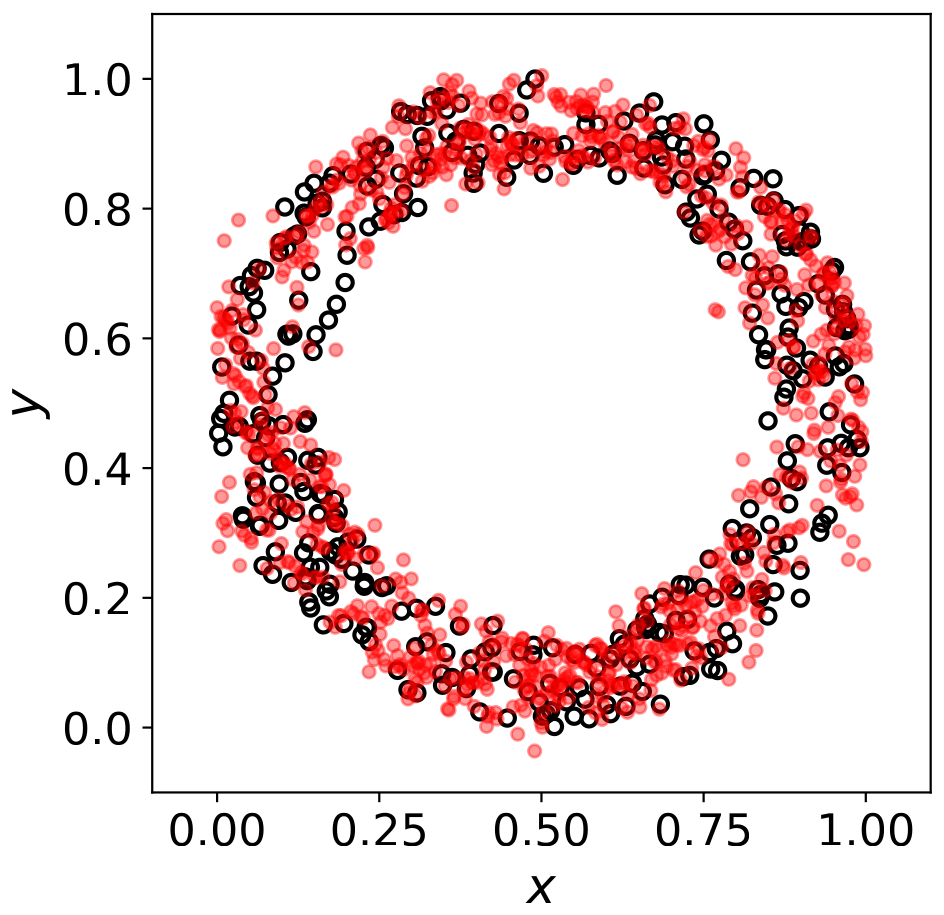
This paper revisits mixture density networks (MDNs), which represent a conditional distribution as a finite mixture of simple Gaussian components, as a physics-informed alternative. Physical knowledge, such as governing equations, thermodynamic monotonicity or known class labels, is added through regularization terms applied to each mixture component. The framework is tested on bifurcations, stochastic differential equations, shock Hugoniot data for silicon carbide and a reaction-diffusion equation, and is compared with conditional flow matching.
Results
On bifurcation data, each mixture component follows one branch, and the component weights shift as new branches appear past the bifurcation point.
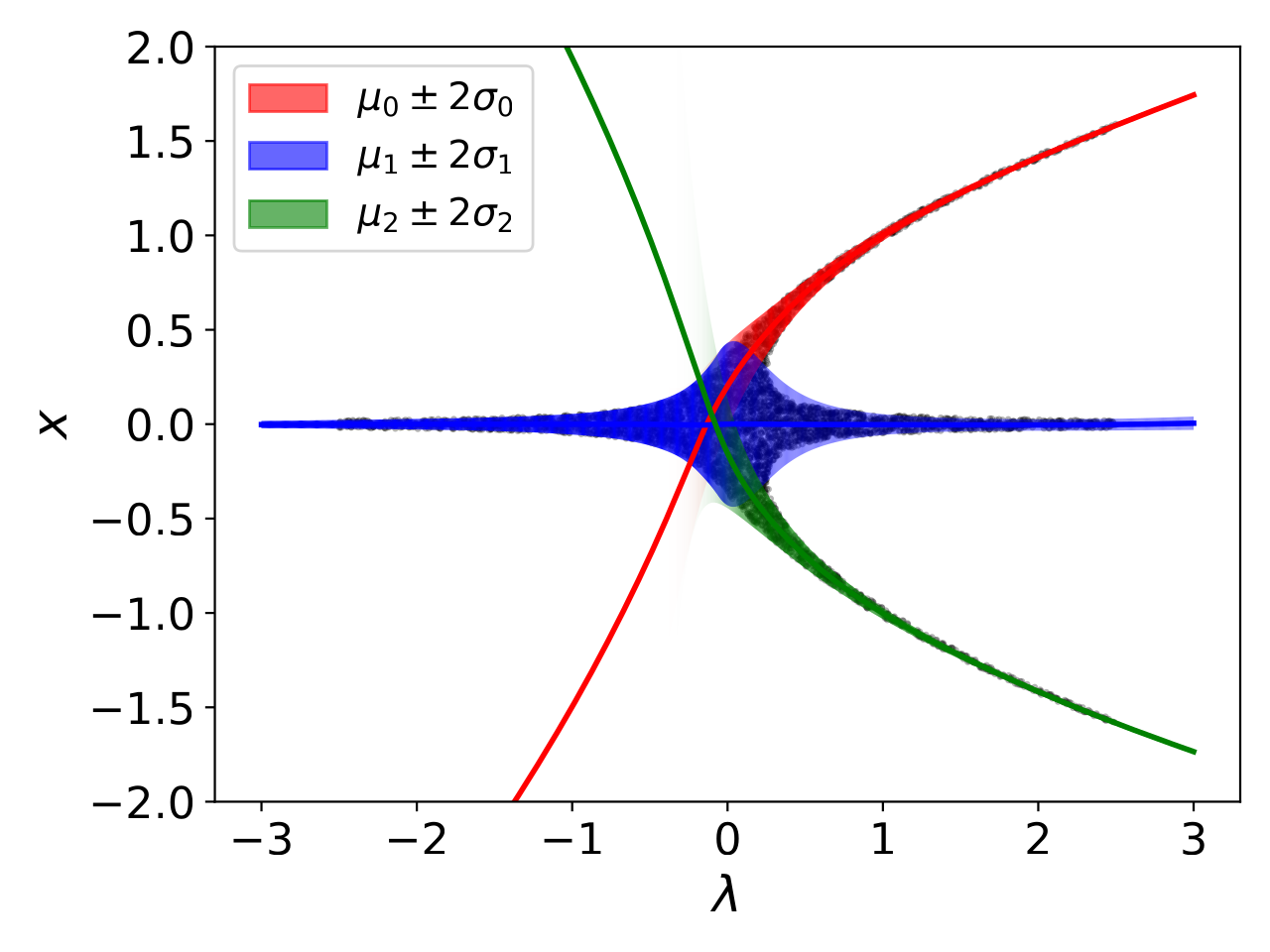
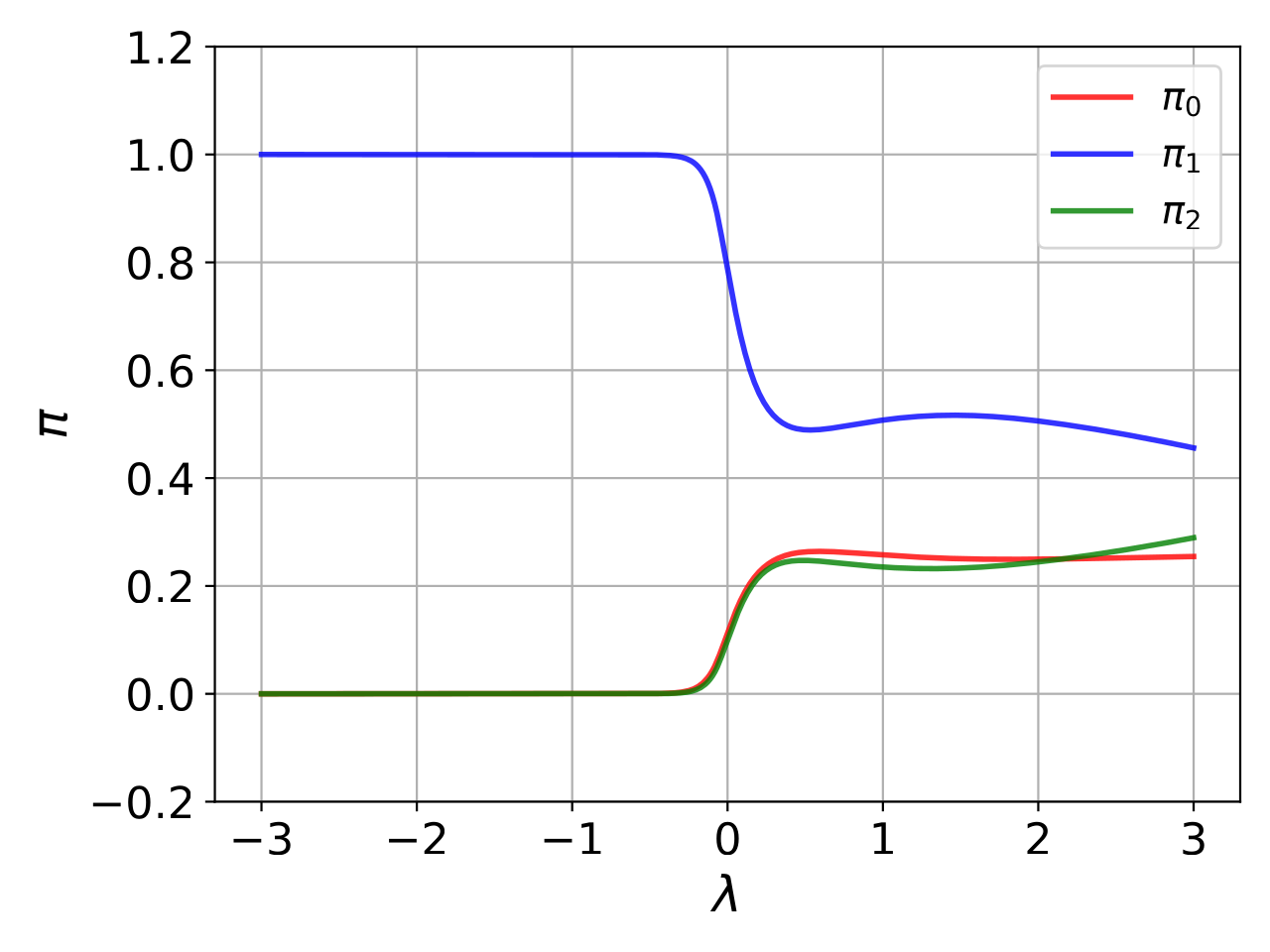
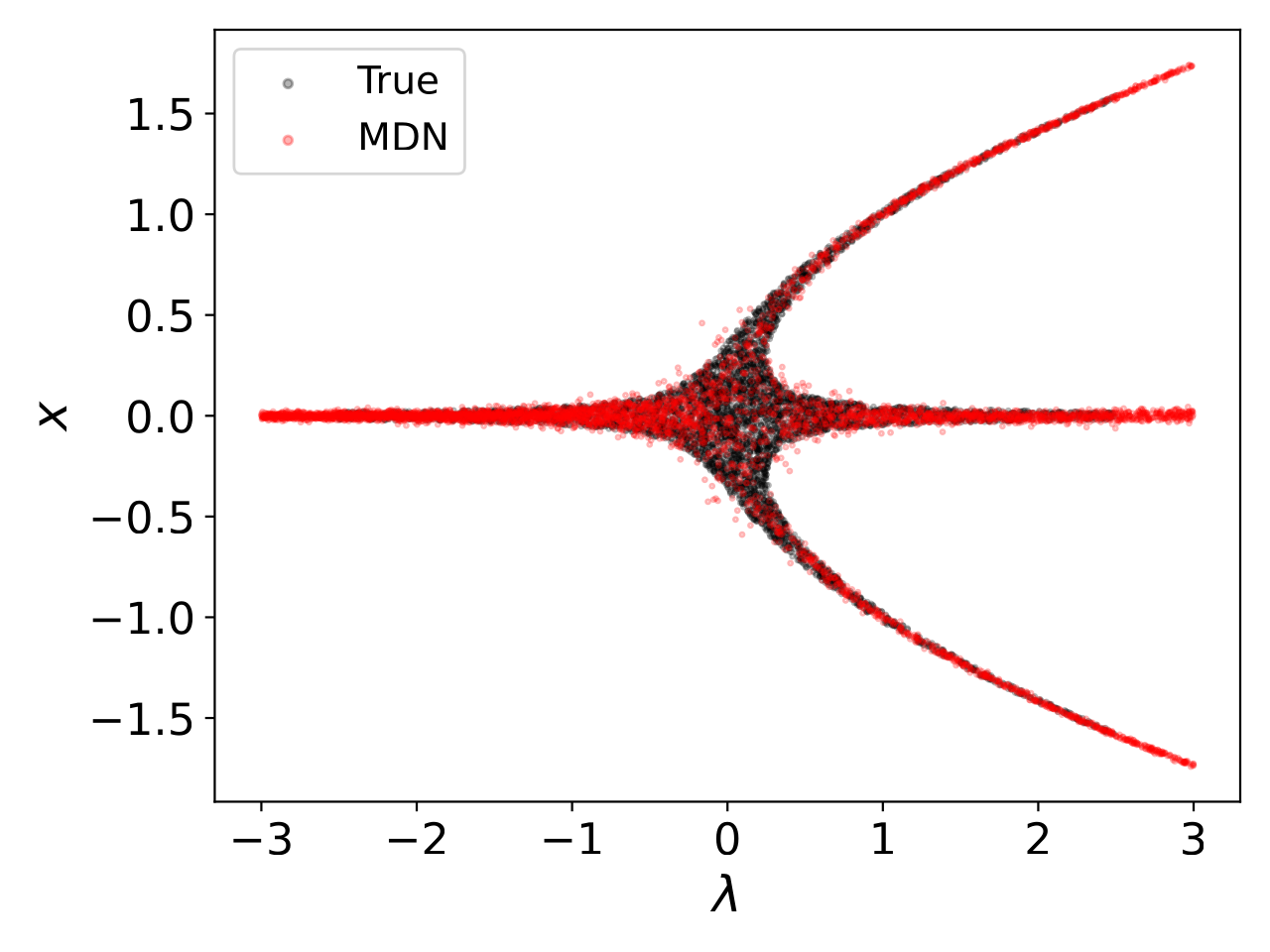
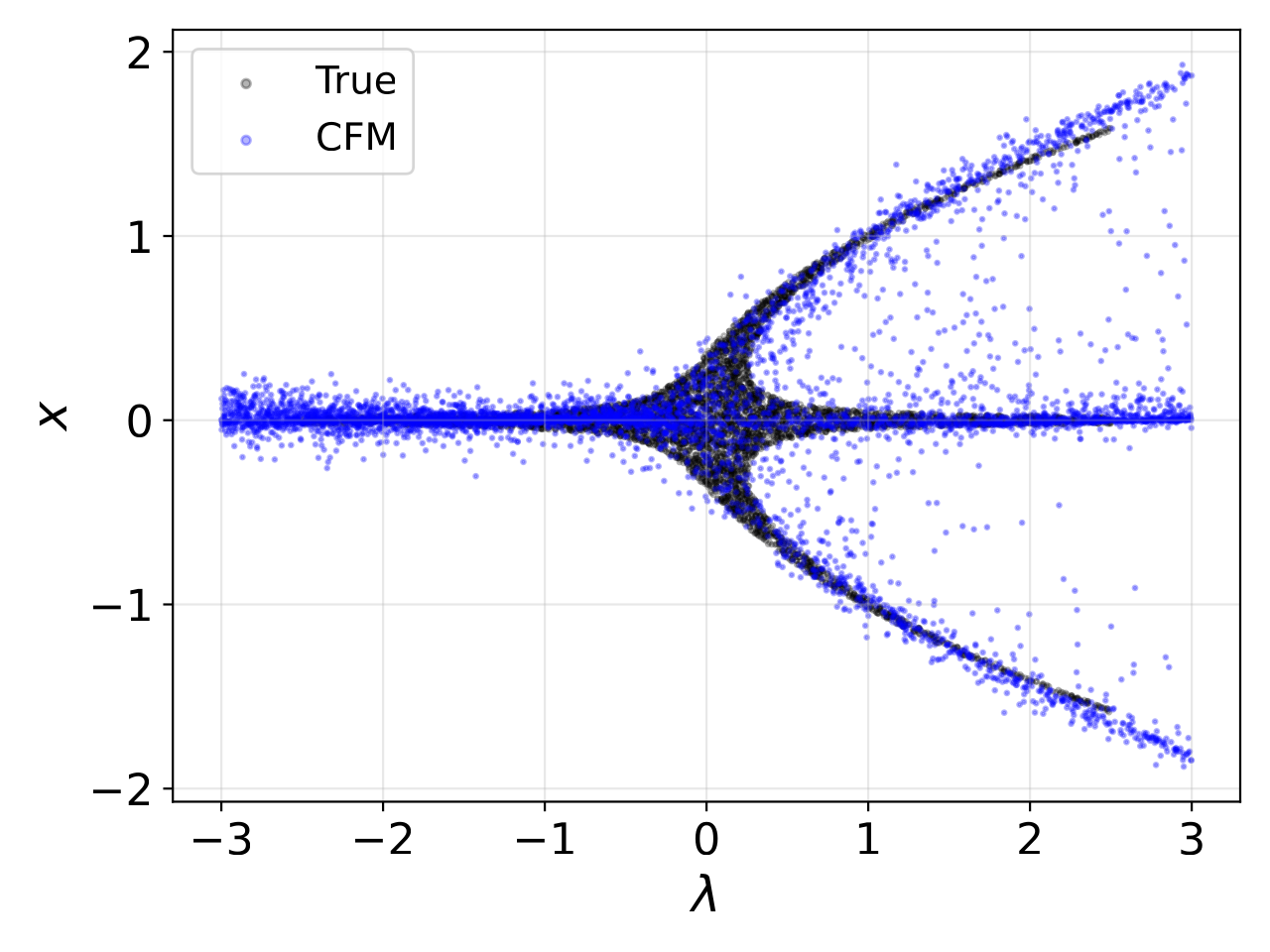
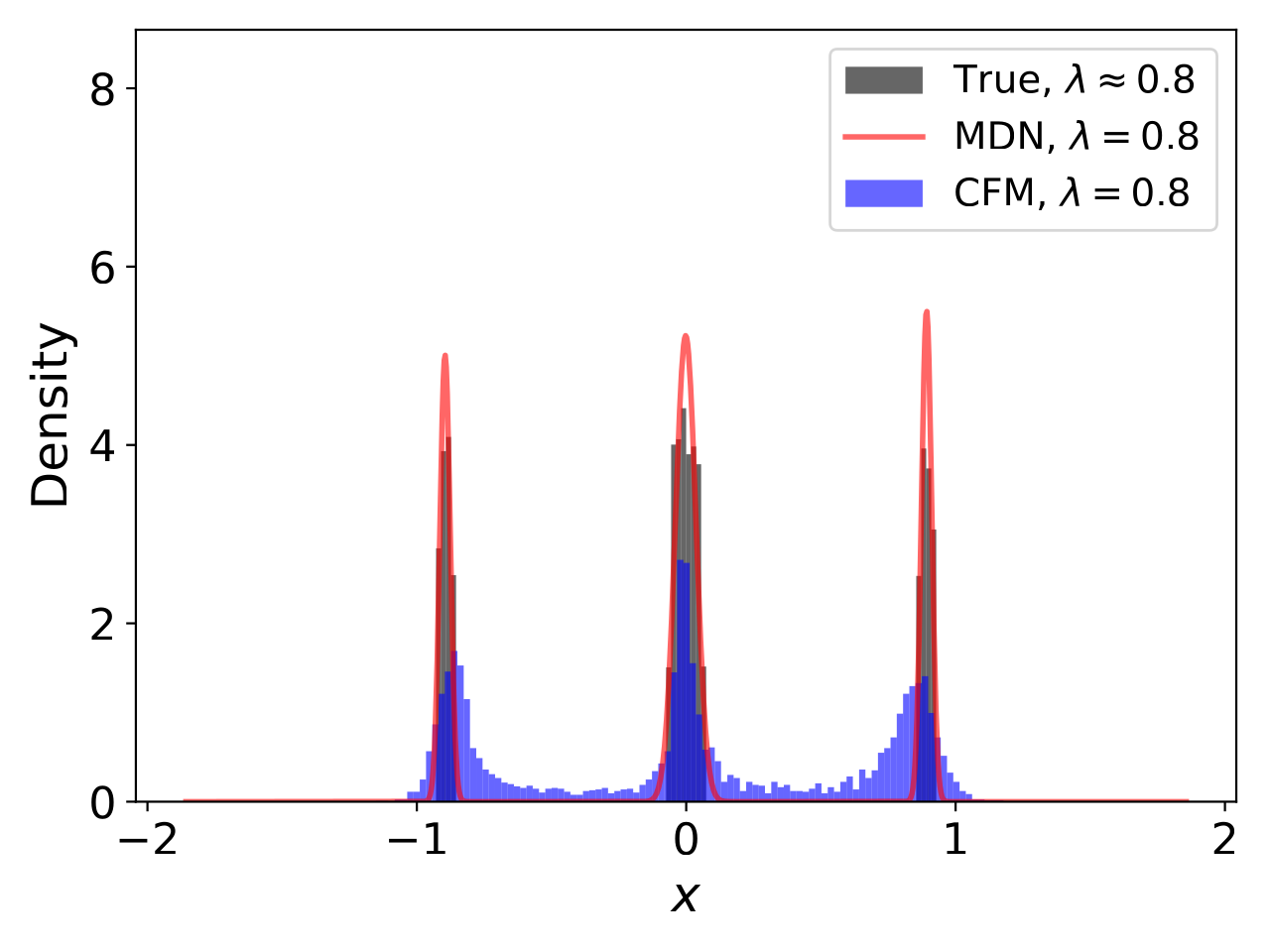
Under comparable model capacity, the MDN resolves the distinct response modes, compared here with conditional flow matching.
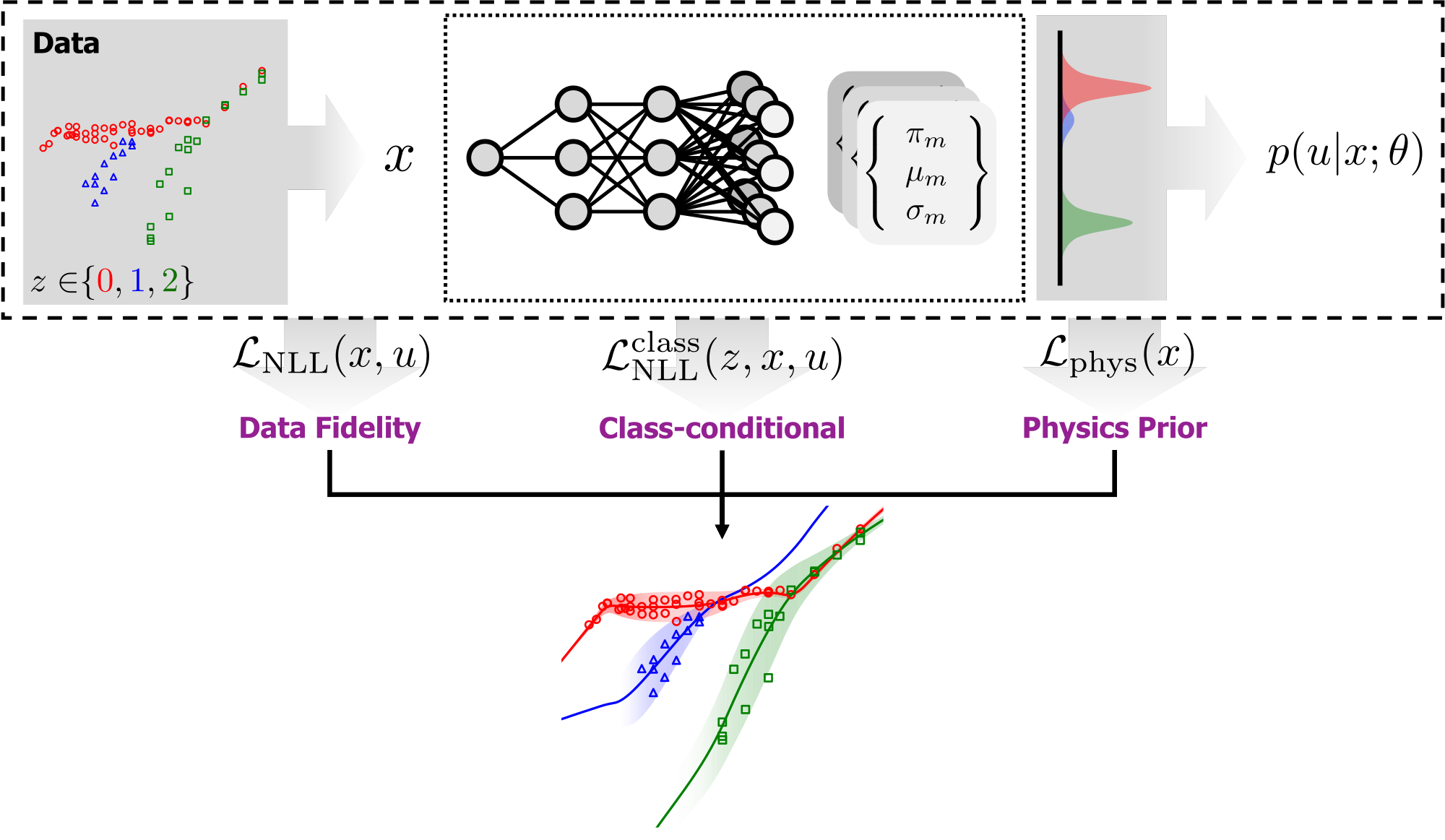
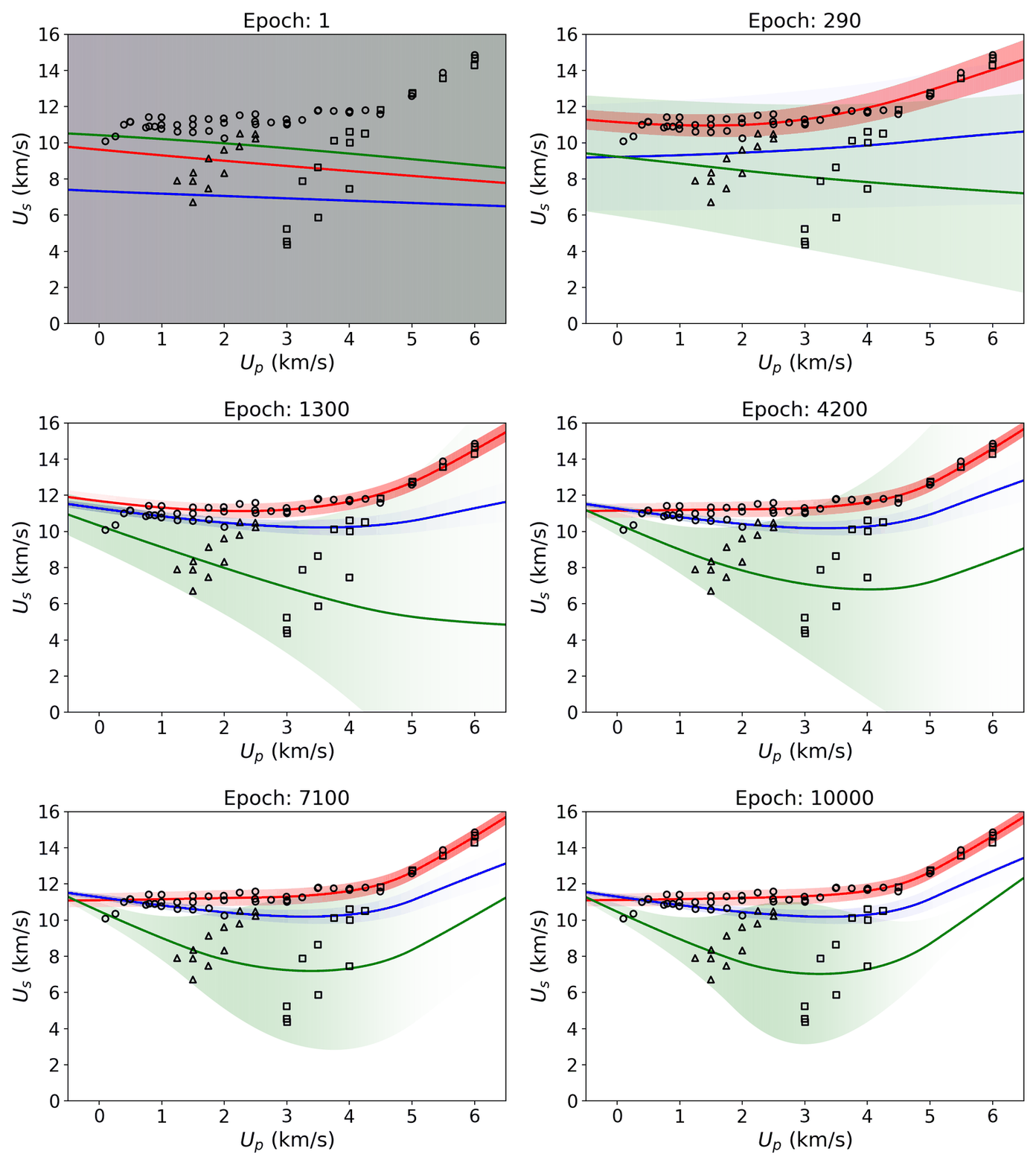
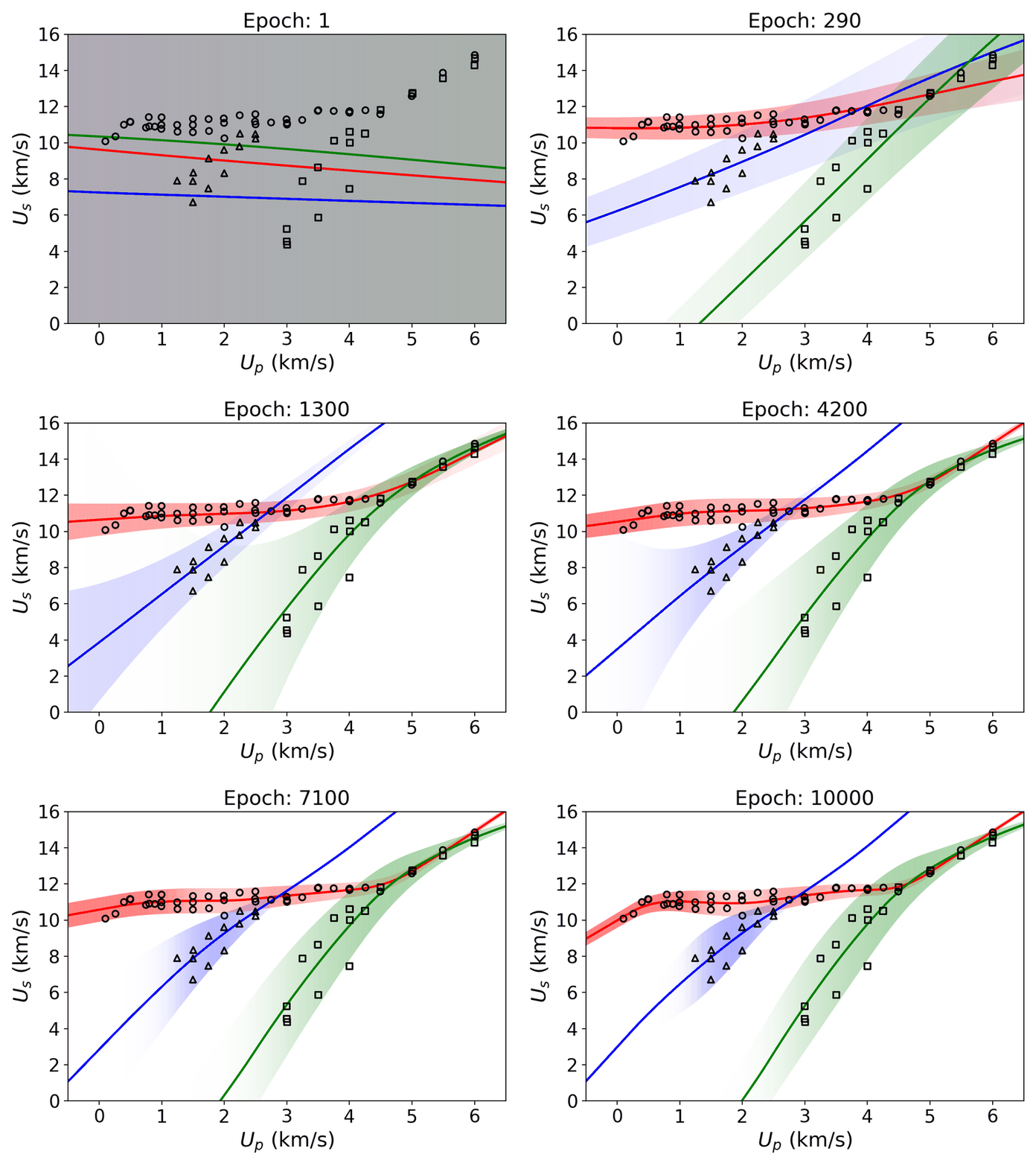
Prior knowledge of the physical system can be incorporated into MDN training to improve the behavior of the learned components.
Key findings
- The mixture model matches conditional flow matching at similar model size and training effort, while being simpler to train and sample.
- Adding physics priors and class-conditioning improves agreement with known physical behavior without extra data or separate models.