Neural Operator Representation of Granular Micromechanics-based Failure Envelope
This page was written by Jinkyo Han with the help of AI (Claude by Anthropic).
Overview
Granular micromechanics models predict failure in porous and particulate materials such as concrete, soils, foams and biological tissues. However, the link from microstructure parameters to a macroscopic failure envelope is implicit: each point on the envelope requires a costly nonlinear, non-smooth simulation along a loading path. This cost grows further in inverse problems, where one searches for microstructures that give a target failure response.
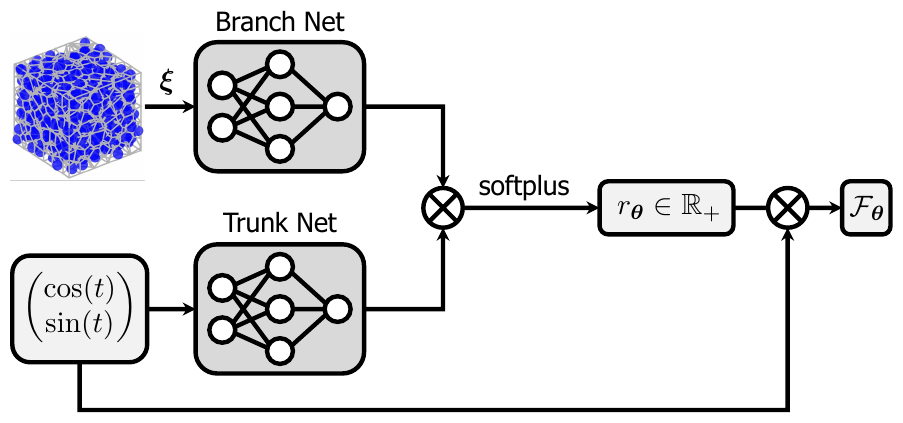
This paper proposes a differentiable neural operator, based on DeepONet, that maps microstructure configurations directly to failure envelopes, enabling fast forward prediction and gradient-based inverse identification. A curvature penalty motivated by Drucker’s postulate pushes the predicted envelopes to be convex. The operator learns from envelopes given as irregular point clouds at varying resolutions, and an ensemble-based active learning strategy picks new simulations where the model is most uncertain.
Results
Motivated by Drucker’s postulate, the failure envelope is kept convex for a stable material response, through a curvature-based penalty on negative signed curvature.
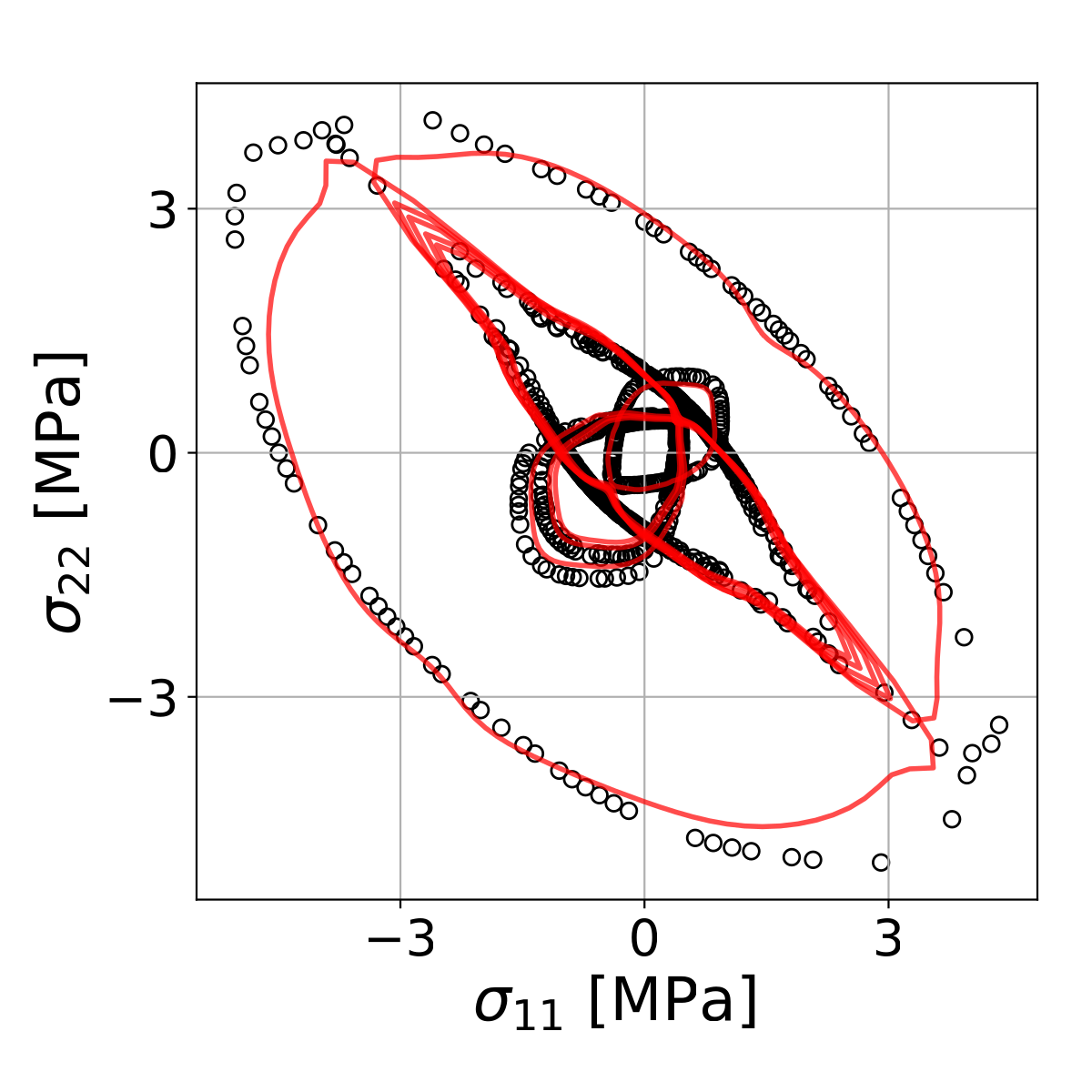
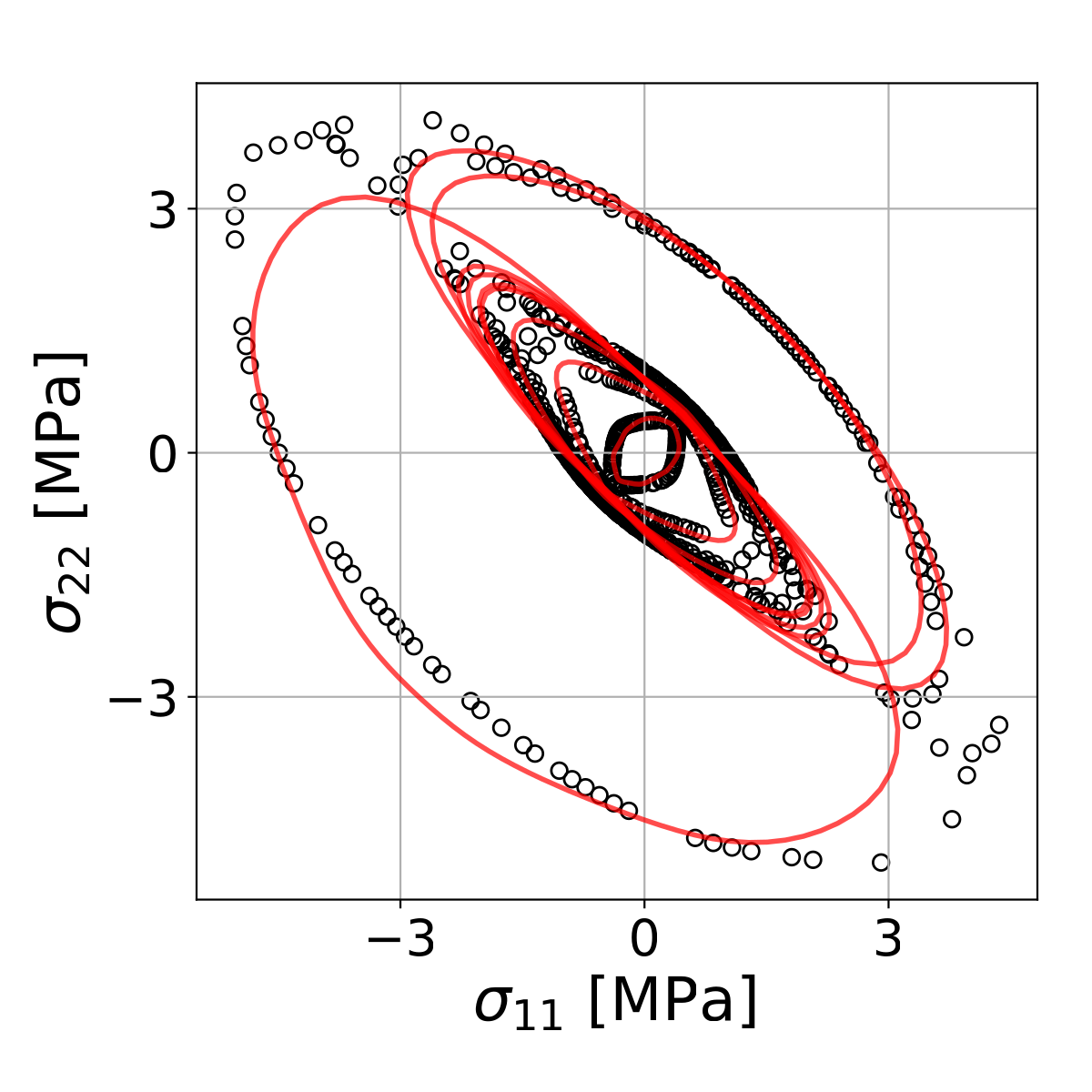
The trained neural operator serves as a differentiable surrogate with fast inference, which enables inverse identification: finding micromechanical configurations that produce a desired material behavior.
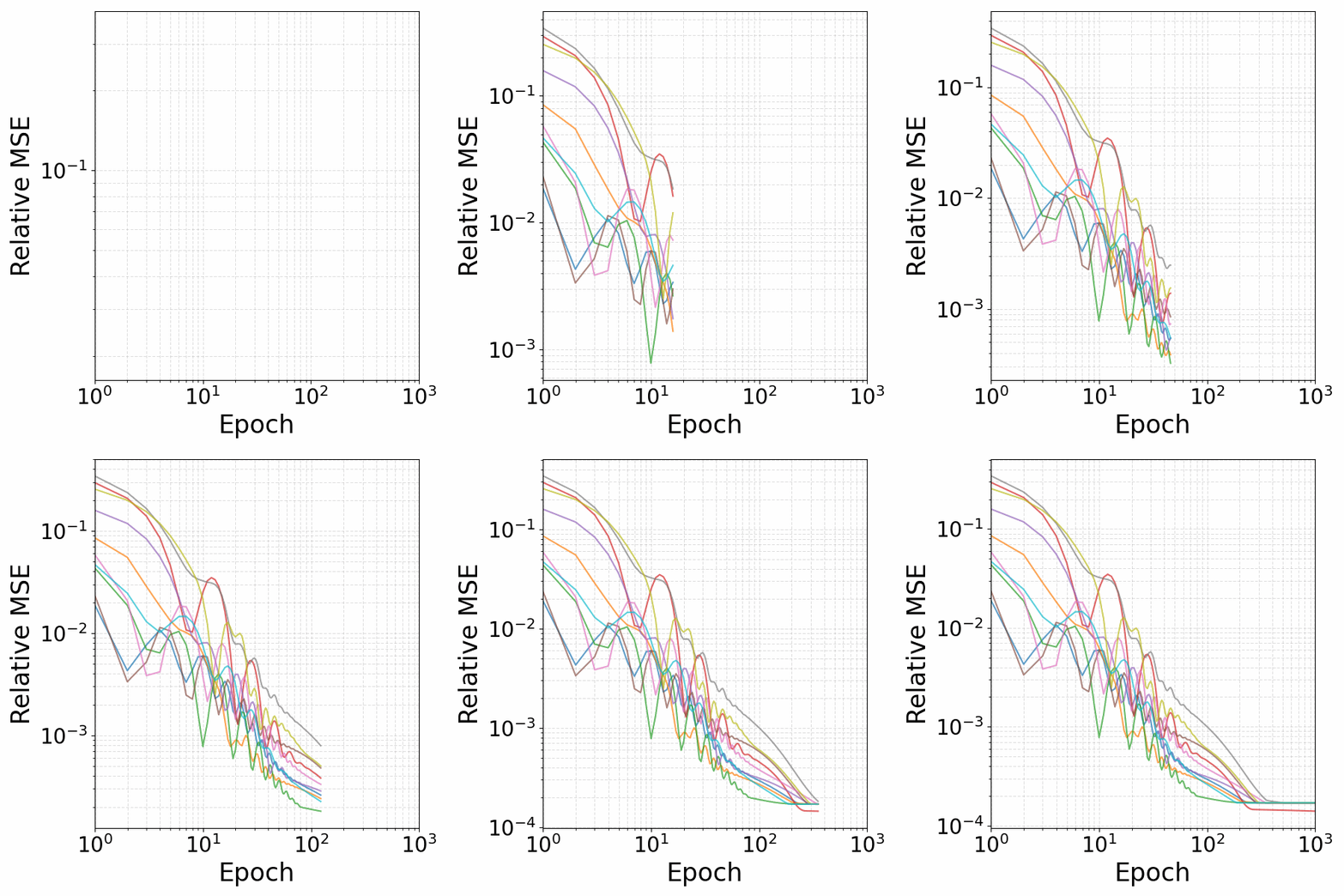
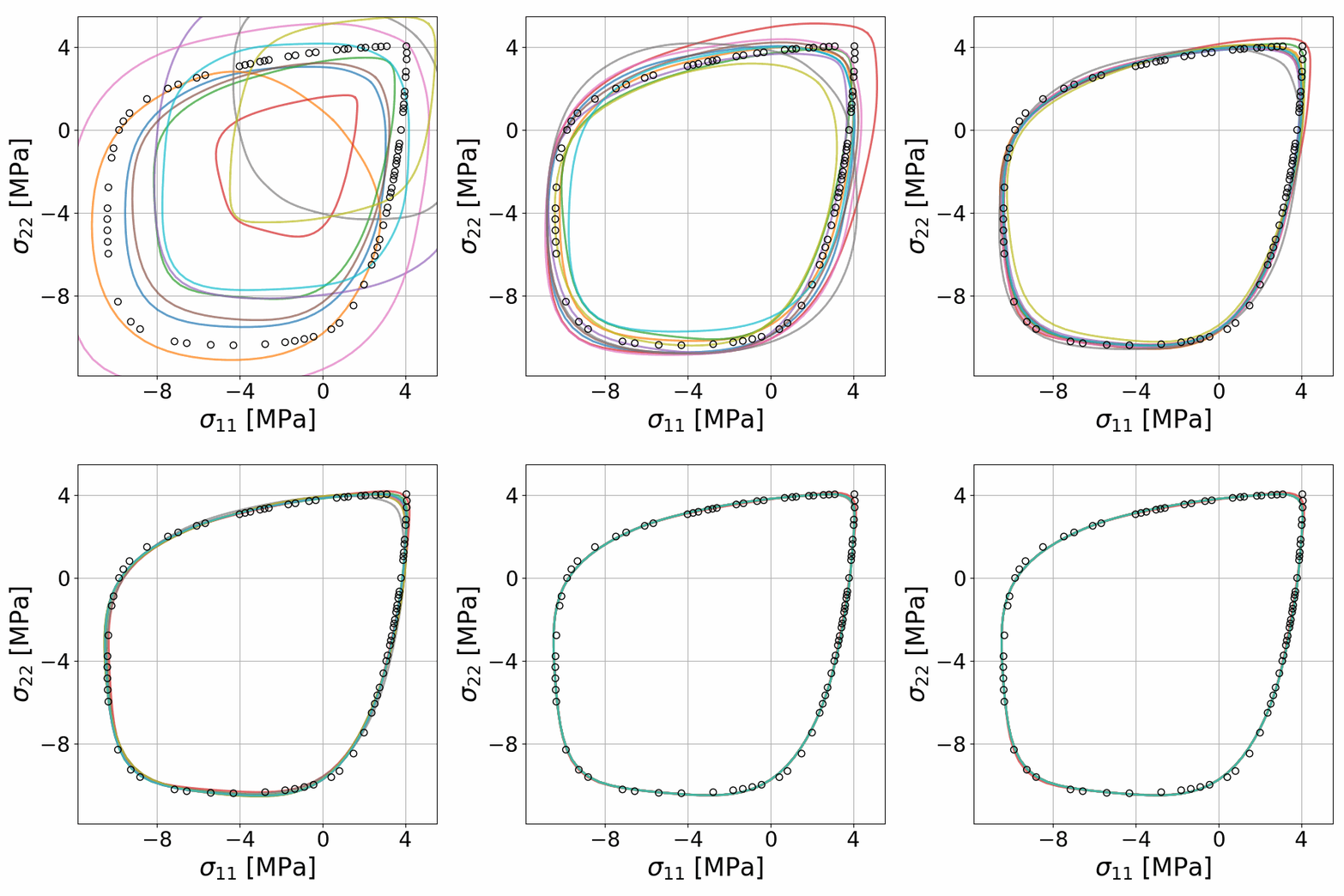
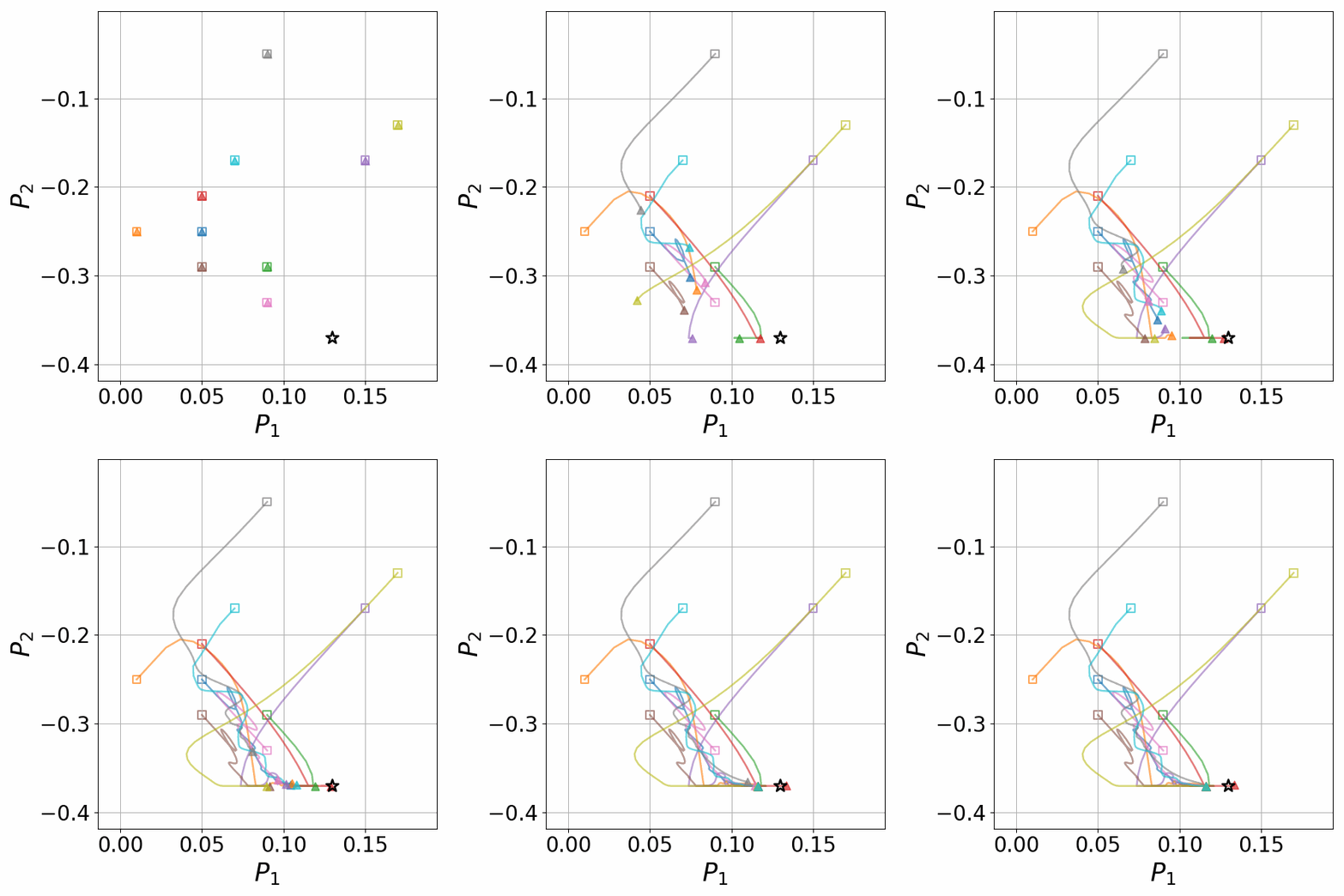
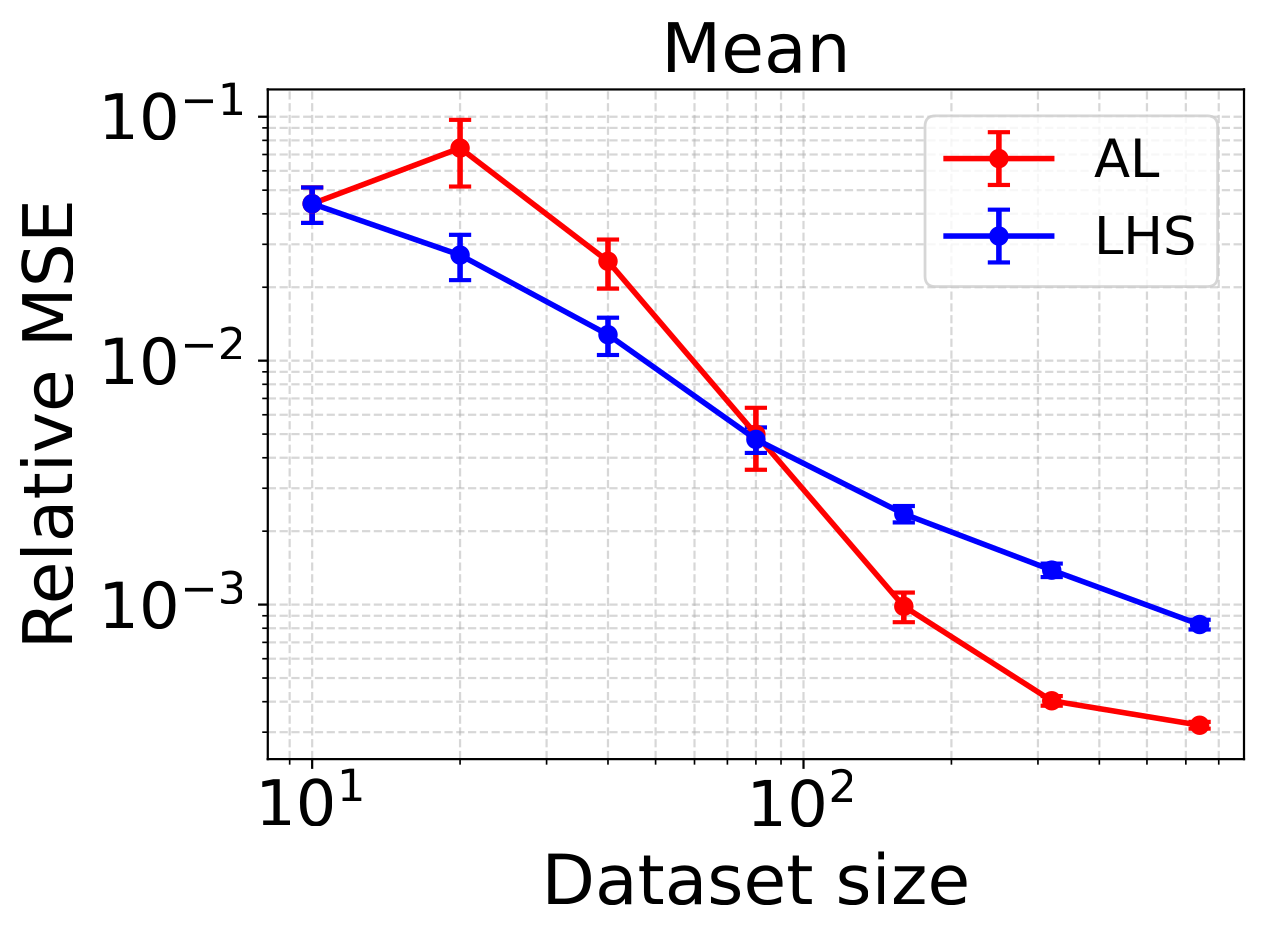
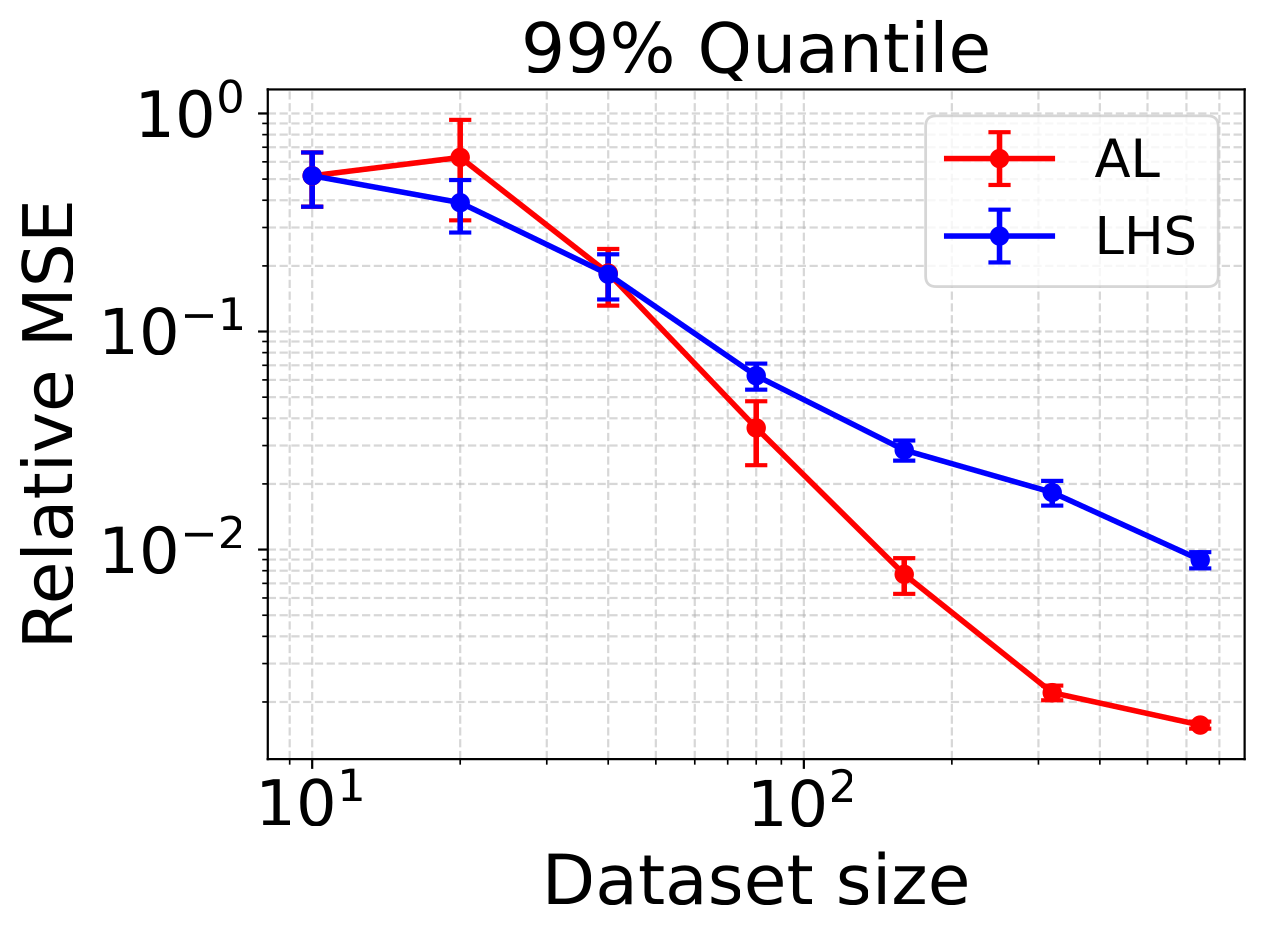
The surrogate also serves as a backbone for uncertainty quantification. In an adaptive sequential sampling example, a smaller dataset chosen by active learning is as informative as a larger dataset from Latin hypercube sampling.
Key findings
- The convexity regularization removes non-physical, non-convex artifacts in both forward predictions and inverse identification.
- Finite differences evaluate the curvature penalty faster than automatic differentiation at the problem sizes of interest.
- Beyond a small initial dataset, 160 adaptively chosen samples gave lower mean error than 320 Latin hypercube samples.